
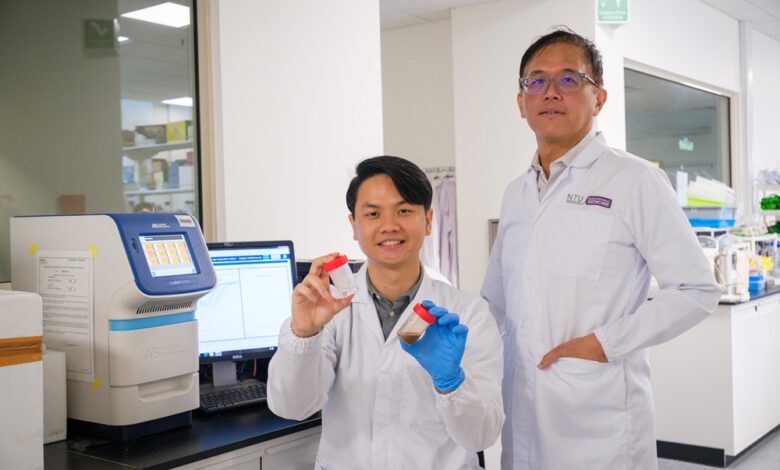
Researchers led by scientists from Nanyang Technological University, Singapore (NTU Singapore) have identified a potential stool biomarker that may help detect early gut barrier dysfunction associated with metabolic dysfunction-associated steatotic liver disease (MASLD), commonly known as fatty liver disease.
Published in the journal Nature Communications, the study was led by Associate Professor Andrew Tan Nguan Soon from the Lee Kong Chian School of Medicine (LKCMedicine). The research focused on angiopoietin-like 4 (Angptl4), a protein found in the intestines and other tissues throughout the body.
The team discovered that intestinal Angptl4 may play a key role in linking dietary factors and gut microbes to a weakened gut barrier, an early event in the development of MASLD. Using experimental mouse models and clinical data from patient groups in Thailand, China and India, the researchers found that faecal Angptl4 levels increased alongside gut microbial imbalance and metabolic dysfunction.
The findings are significant as fatty liver disease continues to rise across Asia, including Singapore, where cases are projected to increase substantially by 2030. Researchers believe a simple stool-based test could provide an easier way to monitor individuals at risk before serious liver complications develop.
The team is now working to validate the biomarker further and develop more accessible testing methods, including a microfluidic version that could support future clinical applications.