Innovative Strategies to Combat Marine Plastic Pollution through Scientific Collaboration

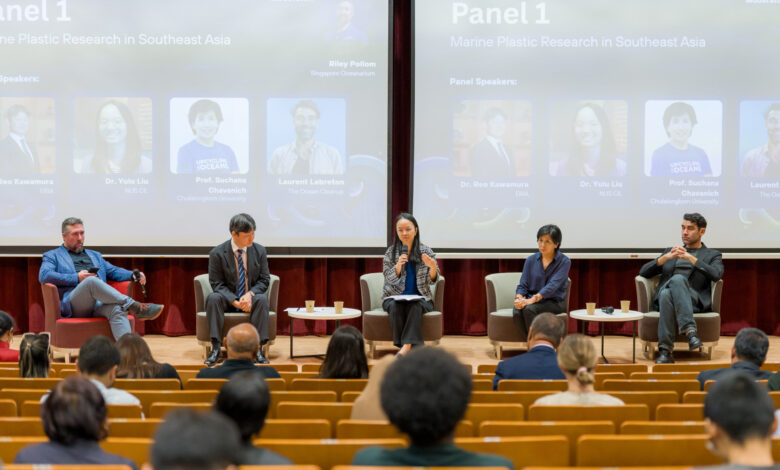
The NUS Tropical Marine Science Institute (TMSI) recently co-hosted a regional forum in Singapore focused on enhancing collaboration to address marine plastic pollution in Southeast Asia. The event, titled “Towards Healthy Oceans,” took place at NUS University Town from January 31 to February 1 and was organized in partnership with the international non-profit organization The Ocean Cleanup.
Forum Overview
The forum brought together a diverse group of stakeholders, including researchers, policymakers, investors, philanthropists, and representatives from the private sector. Participants discussed how to align science-based solutions with implementation partnerships and financial resources to reduce plastic leakage from rivers into the ocean. The discussions underscored the transboundary nature of marine plastic pollution, with a 2025 study by Singapore’s National Environment Agency indicating that the majority of plastic found on the country’s recreational beaches originates offshore. This emphasizes the need for coordinated, science-driven regional responses.
Keynote Highlights
Dr. Neo Mei Lin, a Senior Research Fellow at NUS TMSI, highlighted ongoing environmental concerns related to marine plastics, noting that winds and currents disperse litter across regional waters. Effective responses, she noted, must be supported by robust, science-led strategies that inform actions focused on safeguarding shared ocean resources.
Main Themes of the Forum
The forum concentrated on three primary themes: scientific and technical solutions, partnerships and implementation, and financial investment. Participants discussed the potential of advancements in data analytics, modeling, and AI-enabled monitoring to identify critical river catchments, target river interception efforts, and enhance large-scale impact. The discussions aligned with The Ocean Cleanup’s 30 Cities Programme, which aims to intercept plastic in rivers before it reaches the ocean, particularly in Southeast Asia, where some of the world’s most polluting rivers are located.
Day One Discussions
On the first day, the discussions included marine plastic research, monitoring technologies, and remediation strategies. Associate Professor Peter Todd, Director of NUS TMSI, spoke on regional marine plastic trends and the importance of coordinated scientific efforts. A keynote lecture on AI-based plastic monitoring was delivered by Dr. Laurent Lebreton, Research Director at The Ocean Cleanup.
Research and Governance Insights
Dr. Liu Yulu from the NUS Centre for International Law presented on governance and research gaps within Southeast Asia’s marine plastic context. He remarked on efforts to collaborate with regional scientists to develop a peer-reviewed database of over 700 publications, indicating that pollution monitoring is often the primary research area, including non-English studies in the policy-making process.
Engineering Innovations
Associate Professor Raymond Ong from the Department of Civil and Environmental Engineering at NUS discussed engineering innovations for plastic interception. Meanwhile, Professor Karina Gin and Dr. Ashwini Suresh Kumar co-led discussions on pollution modeling and monitoring networks.
Day Two Focus and Collaborative Strategies
The second day of the forum shifted its focus upstream to examine methodologies that cities and communities can adopt to reduce plastic pollution at the source. Topics covered included community engagement and educational strategies, moderated by Dr. Neo.
Financial considerations were also a key focus, exploring how blue finance, philanthropic resources, and blended finance models can support scalable interventions for improving ocean health. The forum concluded that tackling plastic pollution requires a collaborative approach involving science, policy, business, and community participation. Mr. Boyan Slat, Founder and CEO of The Ocean Cleanup, noted Singapore’s strategic advantages in uniting partners and resources to effectively address this transboundary challenge through cooperative initiatives.
Conclusion
The forum aimed to establish collaborative strategies and develop effective science-led solutions to combat marine plastic pollution throughout Southeast Asia.
(Source: NUS News)