
Scientists Identify Consistent Counterclockwise Motion Preference Independent of Culture

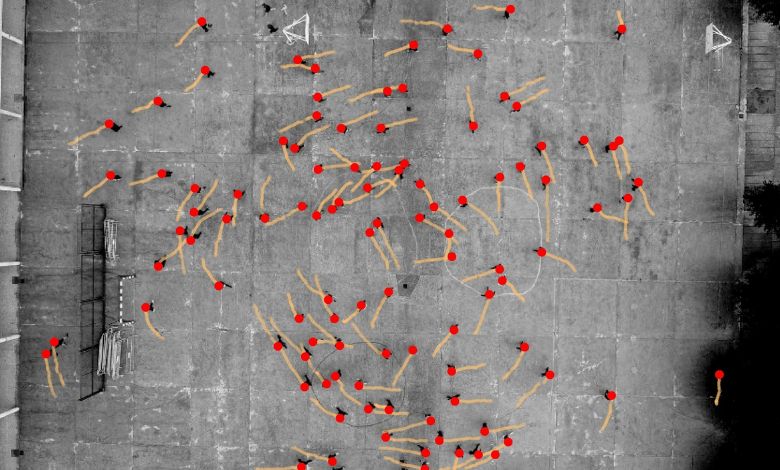
Researchers from Spain and Japan have discovered a surprising pattern in human movement: people show a consistent preference for turning counterclockwise when walking in groups or open spaces. The study, conducted by the University of Navarra and later expanded in collaboration with the University of Tokyo, observed pedestrians under various conditions including different group sizes, environments, and cultural backgrounds.
Across 33 experimental trials, researchers found that in 32 cases, participants tended to turn counterclockwise more often than clockwise. The effect remained largely unchanged across factors such as culture, gender, and handedness. However, age showed a mild influence, with younger participants displaying a slightly stronger tendency toward the counterclockwise direction.
The finding emerged unexpectedly during COVID-19-related pedestrian flow studies, where scientists were analyzing movement patterns for social distancing behavior. The consistent directional bias prompted further investigation into whether cultural or environmental factors could explain the phenomenon, but no strong links were found.
Researchers now suggest the cause may lie in subtle biomechanical or neurological asymmetries in human movement, though the exact reason remains unknown. Interestingly, similar directional preferences are seen in some sports and organized activities, where counterclockwise motion is often standard.
Further studies are planned to examine individual movement patterns more closely in order to better understand the underlying mechanisms behind this universal tendency.