HKU researchers reveal piezoelectric response in diamond membranes, rewriting a century of theory

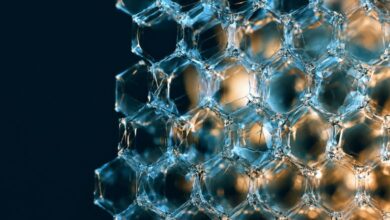
A team led by Professor Zhiqin Chu (Department of Electrical and Computer Engineering) and Professor Yuan Lin (Department of Mechanical Engineering) at the University of Hong Kong reports a surprising piezoelectric response in ultrathin, flexible polycrystalline diamond membranes—contradicting a century-old belief that diamond is non-piezoelectric. Historically used only as a mechanical substrate in MEMS because of its hardness, thermal conductivity, high acoustic velocity, dielectric strength, and wide bandgap, diamond was long considered incapable of generating electricity. Using a novel edge-exfoliation technique, the researchers produced ultra-flexible diamond membranes that endure large bending deformations. Mechanical bending generated stable, repeatable voltage signals; extensive cycling under controlled conditions ruled out environmental noise and triboelectric effects. First-principles calculations attribute the effect to asymmetric grain boundaries: deformation induces charge polarization at these boundaries, creating a potential difference across the membrane thickness. The discovery opens paths for diamond-based self-powered devices and sensors, leveraging diamond’s biocompatibility, chemical stability, and non-toxicity. Potential applications include implantable medical devices and high-reliability micro-energy systems. The work not only expands diamond’s functional roles but also suggests new strategies to engineer piezoelectricity in otherwise non-piezoelectric materials.