NYCU Develops Smart Surface Technology to Eliminate Wireless Signal Dead Zones

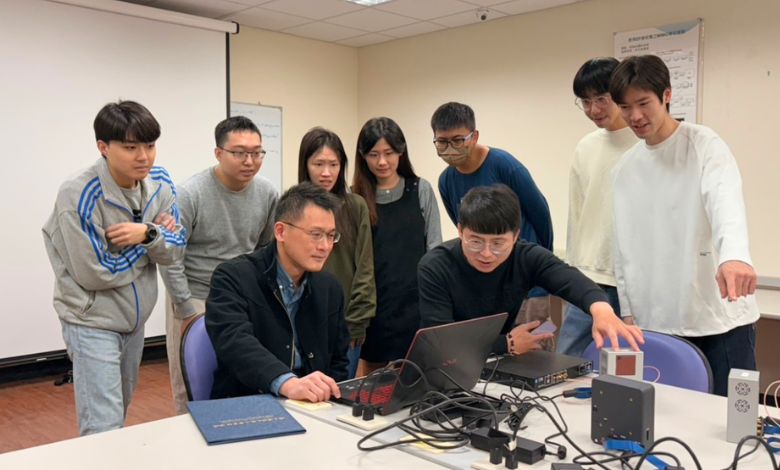
Researchers at National Yang Ming Chiao Tung University (NYCU) have developed a patented communication technology aimed at eliminating wireless signal dead zones and improving connectivity in complex environments. The innovation is based on Reconfigurable Intelligent Surfaces (RIS), which can dynamically control and redirect wireless signals to enhance coverage and stability.
Developed by Associate Professor Jiun-Hung Yu from the Institute of Communications Engineering, the system transforms ordinary surfaces such as walls, ceilings, windows, building facades, and even aerial platforms into intelligent signal reflectors. Unlike traditional networks where physical structures block or weaken signals, RIS-enabled surfaces actively steer wireless waves toward users, reducing interference and signal loss.
The technology functions like a “smart mirror,” continuously adjusting signal paths based on user location and network demand. This makes it especially useful in high-density environments such as airports, stadiums, and public events where network congestion is common.
Beyond urban applications, the system also shows strong potential for satellite communication, improving connectivity in remote, mountainous, and disaster-affected regions. It could support critical services such as emergency response, telemedicine, education, and rural digital infrastructure.
As demand for advanced wireless systems grows, the RIS innovation is expected to play a key role in next-generation 5G, 6G, and satellite networks, enabling more efficient, adaptive, and inclusive global connectivity.