
Mental Health in an AI-Driven World: Challenges and Opportunities

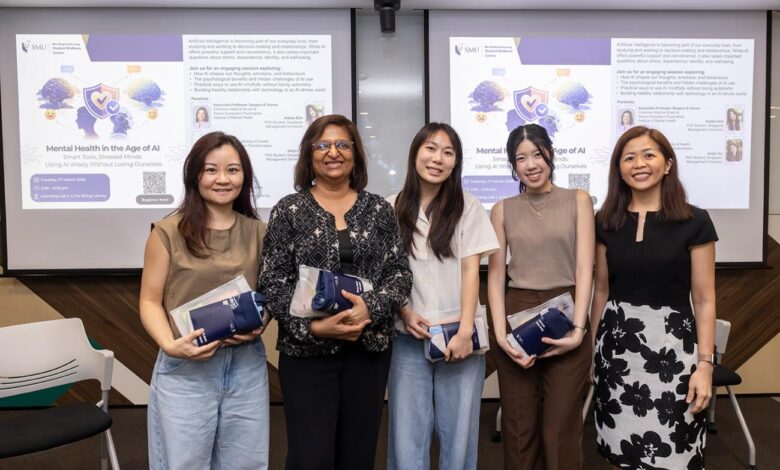
Artificial Intelligence (AI) is increasingly shaping not only academic work but also how individuals reflect on emotions, cope with stress, and seek support. This growing influence on personal wellbeing was the focus of a recent panel discussion titled Mental Health in the Age of AI, organised by the Mrs Wong Kwok Leong Student Wellness Centre.
The session brought together experts from psychiatry, digital health, and research to examine how AI tools are becoming part of students’ everyday emotional lives. Moderated by the Student Wellness Centre, the panel featured perspectives from the Institute of Mental Health, the Ministry of Health Office for Healthcare Transformation, and researchers from Singapore Management University.
A key theme was the dual role of AI as both support and risk. Students increasingly use AI not only for academic tasks but also for emotional reassurance due to its instant availability, non-judgemental responses, and accessibility. However, speakers cautioned that AI cannot fully understand cultural, emotional, and contextual complexity, and may reinforce dependency or emotional isolation.
Survey findings showed strong student awareness after the session, with most participants reporting improved understanding of AI’s benefits and limitations. While AI can lower barriers to support, the panel emphasised that it cannot replace human empathy, trust, and real-world relationships.
The discussion concluded that responsible, mindful use of AI is essential as digital tools become more deeply embedded in mental health experiences.