HKUST Researchers Uncover Novel Insights into Deep-Sea Black Coral and Its Symbiotic Microbiome

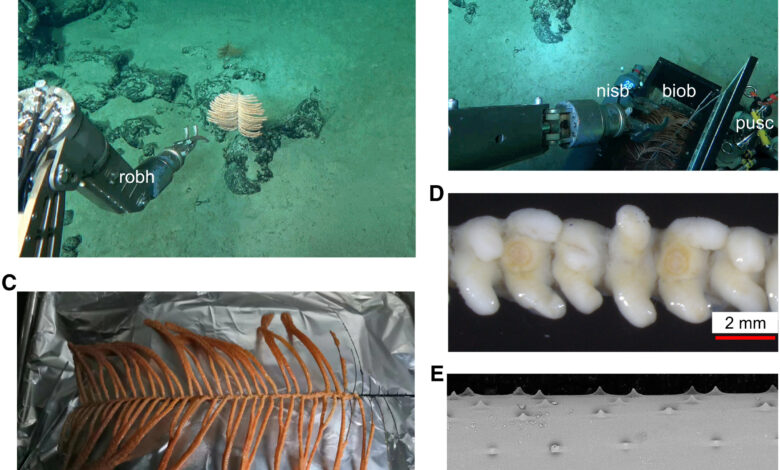
A research team from The Hong Kong University of Science and Technology (HKUST) has advanced knowledge regarding the deep-sea black coral species Bathypathes pseudoalternata and its associated microbiome. The study, led by Professor Qian Peiyuan and in collaboration with the Southern Marine Science and Engineering Guangdong Laboratory (Guangzhou) and the Yellow Sea Fisheries Research Institute of the Chinese Academy of Fishery Sciences, has been published in the journal Cell Host & Microbe.
Comprehensive Hologenomic Analysis
This research marks the first comprehensive hologenomic analysis of B. pseudoalternata, elucidating the mechanisms through which this coral species thrives in extreme environments. Key findings include nutritional complementarity, metabolic cooperation, oxidative stress defense, antiviral protection, and immune homeostasis as essential survival strategies. The study presents a new model illustrating how deep-sea corals maintain an efficient symbiotic system, offering valuable insights for identifying functional gene resources in deep-sea ecosystems.
Integrated Analytical Framework
The researchers utilized an integrated analytical framework that combined host genomics, microbial community profiling, and other methodologies to systematically analyze the symbiotic stability, nutritional cooperation, and immune regulation within the coral. This effort resulted in the assembly of a high-quality genome comprising 16 chromosomes, revealing pathways linked to nutrient uptake and immune responses that enhance the coral’s ability to absorb materials and digest nutrients in nutrient-poor conditions.
Microbial Community and Adaptability
Microbial analyses from samples sourced in the western Pacific Ocean indicated that B. pseudoalternata sustains a stable microbiome that differs from the surrounding environment, suggesting that selective pressures favor symbionts critical for its survival. Notably, essential symbionts are involved in nutrient synthesis, detoxification, and providing an antiviral defense mechanism for the coral.
Research Implications and Support
Professor Qian emphasized the adaptability of deep-sea corals and the importance of their symbiotic relationships in thriving within extreme environments. The research received support from multiple funding organizations, including the National Natural Science Foundation for Young Scientist of China and the HKSAR Government. Significant contributors to the study include Dr. Shao Changwei, Dr. Meng Liang, and Dr. Liu Shanshan, among others.
(Original source: HKUST)