Enhancing CBET Preparation Processes at the University of Nairobi: A Comprehensive Approach

As Kenya moves towards the implementation of Competency-Based Education and Training (CBET) in higher education, universities are addressing significant challenges related to preparedness, resource allocation, and the evolution of academic learning. The national emphasis on basic education under the Competency-Based Curriculum (CBC) has prompted universities to strategize for the anticipated influx of students who will have completed CBC training before entering tertiary education.
Comprehensive Discussions at the University of Nairobi
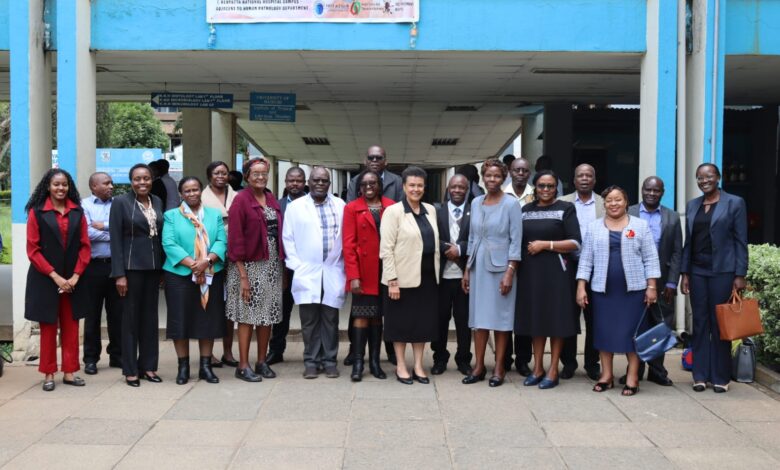
At the University of Nairobi, these challenges are leading to comprehensive discussions across various faculties as part of an ongoing Faculty Needs Assessment initiative focused on CBET. This initiative is part of the university’s efforts to align its academic programs and teaching methodologies with the principles of competency-based education, reflecting a commitment to quality assurance and academic excellence amid changing educational standards.
Initiation of CBET Preparation
Preparation for CBET at the University of Nairobi began in 2023, establishing a framework for the implementation process. By 2024, alignment discussions with the Faculty of Education commenced due to its critical role in preparing educators for competency-based teaching methods. Concurrently, the university’s Senate approved the creation of a CBET–CBI Committee responsible for overseeing this transition.
Role of the CBET–CBI Committee
Chaired by Professor Rosemary Imonje, this committee has played a key role in coordinating the initiative alongside the university’s Quality Assurance team. The committee conducts sensitization sessions, discusses policy matters, and facilitates structured faculty engagements to ensure that departments are aware of the opportunities and responsibilities associated with competency-based education.
Faculty Needs Assessment
The current faculty needs assessment marks the fourth phase in a twelve-step implementation roadmap for CBET. The objective of this assessment is to enable faculties to evaluate their readiness by examining programs, infrastructure, pedagogical resources, and human competencies. It also prompts departments to consider how curricula can be modified to achieve competency-based outcomes without requiring a complete overhaul of existing educational frameworks.
Multidisciplinary Discussions in the Faculty of Arts and Social Sciences
Preliminary discussions within the Faculty of Arts and Social Sciences, the largest faculty, have revealed a multidisciplinary nature in several current programs. Departments such as information science and journalism showcased the increasing convergence of academic fields. Faculty members emphasized that the curriculum design should remain the cornerstone for aligning resources and infrastructure, highlighting the importance of understanding CBET’s nuances in shaping academic programs.
Focus on Realities in the Faculty of Business and Management Sciences
Meanwhile, the Faculty of Business and Management Sciences has focused on preparing students for post-graduation realities. Proposals have emerged for a common financial literacy and entrepreneurship course aimed at providing students with practical skills in investments and financial decision-making. Many participants view CBET as an opportunity to reassess educational priorities beyond specialized fields to include relevant workforce skills.
Program Duration and Learning Outcomes
Discussions also addressed program duration, with CBET placing significance on learning outcomes rather than fixed timelines, leading to inquiries about the possibility of shortening certain programs from four years to three. However, this poses challenges for fields such as health sciences, which often require extended training periods of five to six years.
Evolving Curriculum Relationships
Additionally, the evolving relationship between secondary school and university education was a topic of conversation. With foundational content now taught in Grades 11 and 12 under CBC, universities may need to adapt their curricula to build on this knowledge instead of repeating it. However, uncertainty persists as the specifics of the senior school curriculum continue to develop.
Challenges in the Faculty of Health Sciences
In the Faculty of Health Sciences, discussions focused on the practical implications of academic reform, particularly regarding community-based learning experiences that have encountered logistical challenges. Faculty members also raised concerns about the need to adjust evaluation criteria and assessment frameworks to better align with CBET principles.
Aligning Standards in the Faculty of Built Environment
During discussions in the Faculty of Built Environment, participants emphasized the importance of aligning competency-based education with international and professional standards. There is a recognition that CBET must not only satisfy national policy requirements but also prepare graduates for competitive global environments. This raises significant considerations about the ability of CBET to equip students to meet both local and international professional standards while ensuring depth in specialized training.
A Vital Opportunity for Reconsideration
Across the faculties involved, there is a growing consensus that CBET represents more than just a technical modification of existing curricula; it serves as a vital opportunity to reconsider how universities can effectively prepare students for a complex and dynamic world, where adaptability and interdisciplinary knowledge are essential.
Ongoing Needs Assessment Initiative
As Kenya approaches its first university intake of CBC graduates, the ongoing needs assessment initiative is crucial for the University of Nairobi, reinforcing its role in national educational transformation. As institutions across the country prepare for the transition to CBET, questions regarding readiness, infrastructure, and capacity remain pertinent, significantly influencing the future of higher education in Kenya.
(Source: University of Nairobi)