AI-Driven Interdisciplinary Collaborations: Creating Beauty through Technology and Education

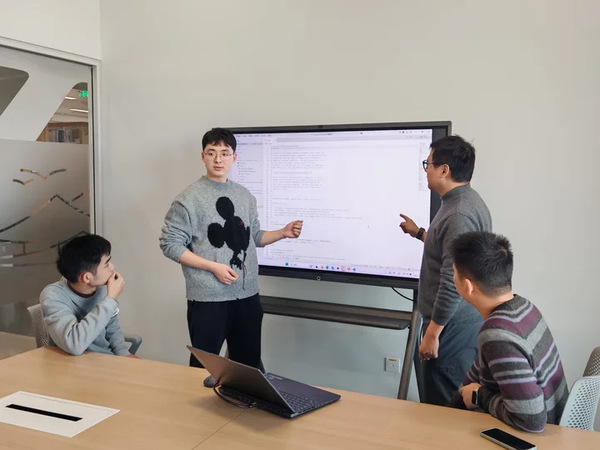
Recent advancements in interdisciplinary collaboration highlight the role of artificial intelligence (AI) in generating creative solutions across multiple fields, including medicine, engineering, information science, and the humanities. This integration was showcased at the inaugural National “Qizhen Wenzhi” Artificial Intelligence Models & Agents Competition for University Students, hosted by Zhejiang University.
Interdisciplinary Collaboration at the Competition
At this event, teams comprising students and faculty members from Zhejiang University formed interdisciplinary groups to develop functional AI models aimed at solving real challenges. These models were applied in practical contexts, moving beyond theoretical concepts to yield concrete results in areas such as energy, medicine, and language education.
AI in Energy Production Education
In a high-level course titled *Process Control of Energy Production*, students faced challenges related to the complexity of the subject. In response, Lin Xiaojie from the College of Energy Engineering collaborated with three students to create an AI-based “translator.” This tool aids in simplifying complex concepts and visualizing intricate scheduling problems, which has been found to significantly enhance student comprehension and engagement.
Medical and Engineering Innovations
Another noteworthy project involved students from medical and engineering backgrounds addressing the complexities of tumor immune microenvironments. Their teamwork resulted in the creation of TLSight-Agent, an automated intelligent analysis system capable of identifying lymphoid structures and quantifying immune cells, thus offering a novel approach to clinical diagnostics.
Advancing Architectural Education with AI
In the realm of architectural education, a team from the College of Civil Engineering and Architecture focused on enhancing the generative capabilities of AI. Their project aimed to deepen understanding of spatial design concepts, resulting in a system that improved design efficiency and facilitated greater creative exploration in architectural projects.
Innovative Language Learning Solutions
Additionally, the School of International Studies developed a new AI model for learning the German language, featuring a multi-agent teaching platform that enhances student engagement and proficiency through collaborative efforts and real-time feedback, coordinated across continents.
The Future of Interdisciplinary Education
These initiatives illustrate a growing trend toward improving educational ecosystems through interdisciplinary cooperation, where faculty and students collaboratively tackle real-world problems. There is a notable shift from traditional knowledge acquisition to fostering creativity and practical problem-solving skills. The outcomes of these projects underscore the significant potential of integrating AI into education, positioning future generations to not only gain knowledge but also to devise innovative solutions that merge technology with creativity.
Source: Zhejiang University