Circular Economy Innovation Converts Mussel Shell Waste into Adaptive Ventilation Blocks

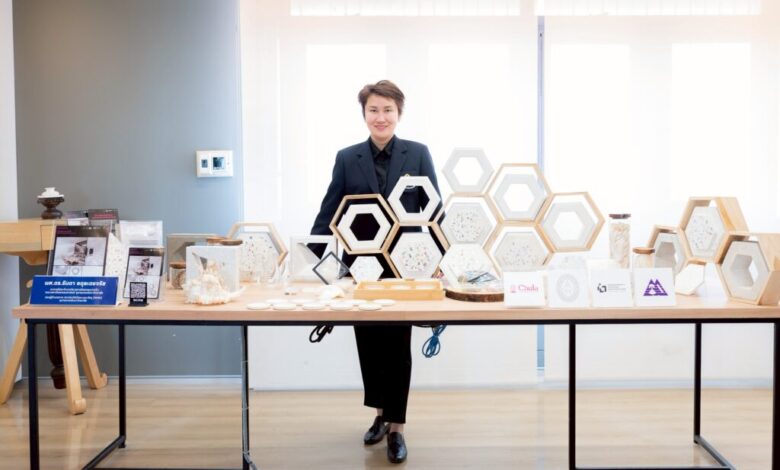
Researchers at Chulalongkorn University have developed the “Bio-Responsive Block,” an innovative ventilation block made from recycled mussel shells, transforming coastal waste into a sustainable architectural solution. Led by Assistant Professor Dr. Runda Aduldejcharas from the Faculty of Architecture and the Metallurgy and Materials Science Research Institute, the project highlights how community waste can be repurposed into environmentally friendly construction materials while supporting local economies.
The innovation addresses two pressing challenges: the growing volume of shell waste in coastal communities and the need to reduce carbon emissions in the construction industry. Instead of burning mussel shells at high temperatures — a process that generates significant emissions — the research team adopted a grinding method that is more energy-efficient and accessible for community-level production.
The crushed shells are combined with terrazzo cement to create decorative ventilation blocks with natural textures and colors. Beyond aesthetics, the blocks are designed for Thailand’s hot and humid climate, improving airflow and reducing indoor heat through passive ventilation.
Importantly, the production process uses simple household tools, allowing local communities to participate directly in manufacturing and potentially establish sustainable community enterprises. The project also opens opportunities for educational tourism, local craftsmanship, and circular economy initiatives.
By combining traditional wisdom with modern sustainable design, the Bio-Responsive Block demonstrates how research and innovation can create environmental, social, and economic value for communities while advancing green architecture and low-carbon building solutions.