

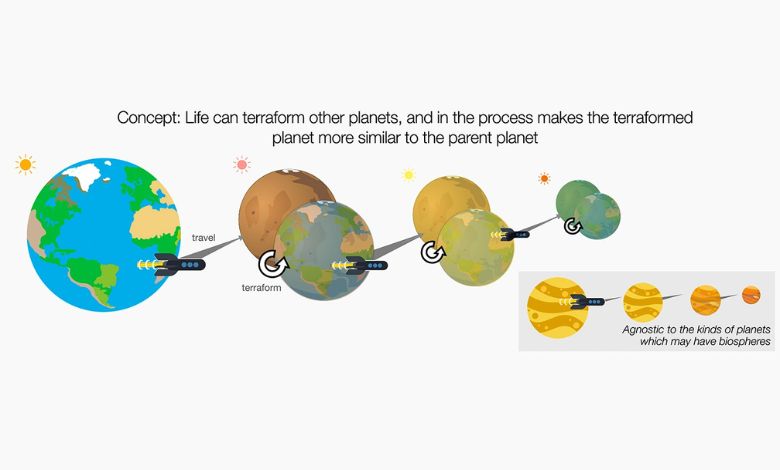
Researchers from the Institute of Science Tokyo and the National Institute for Basic Biology have developed a novel framework for detecting extraterrestrial life without relying on traditional biosignatures. The study, led by Harrison B. Smith and Lana Sinapayen, introduces an “agnostic biosignature” approach that identifies life through large-scale statistical patterns across populations of planets rather than signals from individual worlds.
Using simulation models, the researchers propose that if life can spread between planets and alter their environments, it may leave detectable correlations in planetary characteristics across space. These patterns could indicate biological influence even when no direct evidence of life is observable.
The method also allows for grouping planets most likely affected by life, improving the efficiency of future astronomical surveys. While still theoretical, the approach offers a promising alternative for astrobiology, especially when traditional chemical or atmospheric indicators are uncertain or misleading.