

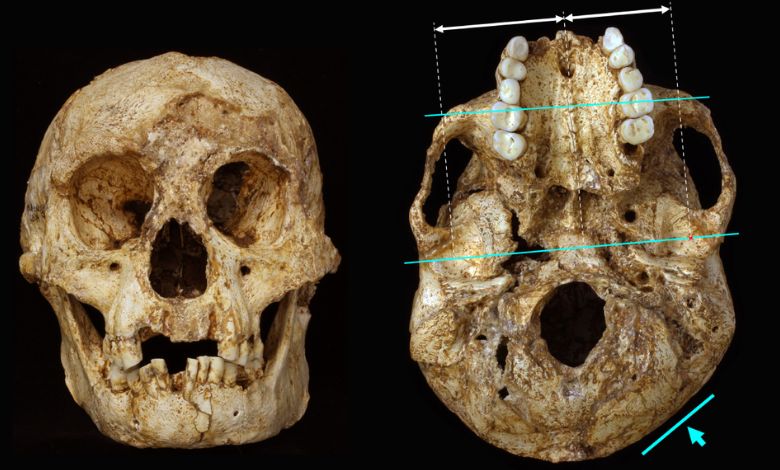
New research suggests that ancient human parents faced many of the same childcare challenges experienced by modern families, including caring for highly dependent newborns. A study led by Professor Yousuke Kaifu from the University of Tokyo found evidence that archaic humans may have given birth to helpless infants requiring extensive parental care.
Unlike other great apes, human babies are born with underdeveloped brains, weak neck muscles and soft skull bones, making them unable to move independently. Researchers studied cranial shapes from modern infants, historical Japanese skeletal remains, fossilised Homo erectus and Homo floresiensis specimens, and compared them with skull measurements from other great apes.
The team found that human skulls across different periods showed a much wider range of deformation, including signs consistent with deformational plagiocephaly, or flat head syndrome. This condition occurs when infants spend prolonged periods in the same position due to limited movement and weak neck control.
The findings suggest that the challenges of raising dependent infants may have existed for more than one million years, dating back to early human ancestors such as Homo erectus. Researchers believe this level of childcare likely required cooperation and social support, as mothers alone may have struggled to protect and care for vulnerable infants in prehistoric environments.
The study provides new insights into the evolution of parenting, social behaviour and human development.