
UBD Hosts the Asian Waterbird Census 2026: A Key Biodiversity Monitoring Initiative

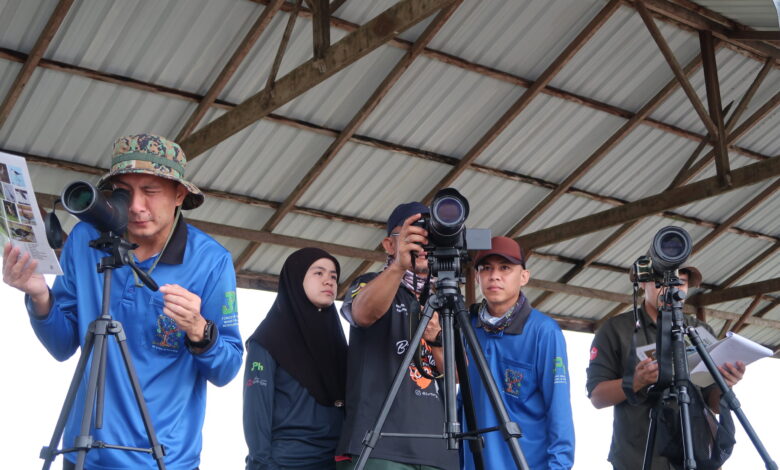
The Institute for Biodiversity and Environmental Research (IBER) at Universiti Brunei Darussalam (UBD) organized the ‘IBER’s Asian Waterbird Census’ from January 13 to 15, 2026. This program is part of the International Waterbird Census (IWC), which is recognized as one of the most extensive biodiversity monitoring initiatives worldwide. The event enlists the participation of volunteers and local communities in the counting of migratory waterbirds. Notably, 2026 marks both the 40th anniversary of the Asian Waterbird Census (AWC) and the 60th anniversary of the IWC.
Program Coordinator Insights
Dr. Salwa Khalid, the program coordinator, stated that January and February are critical months when many species congregate in wetlands, offering an important opportunity to monitor population sizes, trends, and distribution changes, as well as to identify essential habitats.
Diverse Participation
The event attracted a diverse array of participants, including government officials, conservation organizations, researchers, bird enthusiasts, and volunteers interested in waterbird monitoring.
Training and Activities
During the three-day event, attendees engaged in lectures and practical training sessions that included field exercises focused on identifying waterbirds, counting techniques, and using ‘eBird,’ a free mobile application developed by the Cornell Lab of Ornithology for recording bird observations.
Field Activities at Important Bird Areas
Field activities were primarily conducted at the Wasan paddy fields, which is designated as one of Brunei Darussalam’s seven Important Bird Areas (IBAs). IBAs are recognized as sites of international significance for bird conservation and biodiversity, based on a standardized, data-driven set of criteria. Other designated IBAs in Brunei include Belait peat swamps, Tasek Merimbun, Brunei Bay, Ulu Temburong, Ladan Hills, and Seria Coast.
Commitment to Conservation
IBER continues to support this longstanding regional and international conservation initiative, contributing to the health of wetland ecosystems and migratory bird populations. The program also emphasizes IBER’s dedication to capacity building, knowledge sharing, and strengthening partnerships in biodiversity conservation.
Original source: UBD news release.