AI-Driven Carbon Market Innovation: Insights from Chinese and German Scholars at Wuhan University

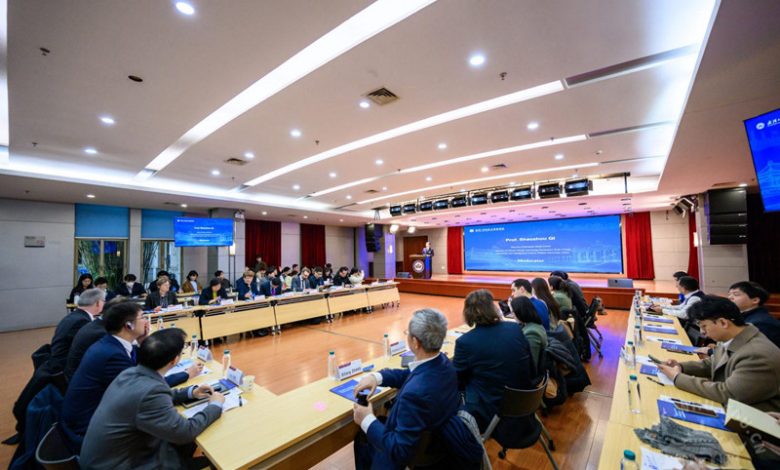
On December 15, a seminar focused on carbon market innovation and industrial transformation in the context of artificial intelligence (AI) was held at Wuhan University. The event featured several scholars from China and Germany, along with experts from various esteemed institutions, including Heidelberg University, Tsinghua University, and the University of Hong Kong.
Importance of Renewable Energy
Professor Andreas Loschel from Ruhr University Bochum discussed the importance of renewable energy in the future energy landscape, emphasizing how AI can improve the efficiency and flexibility of energy systems. He advocated for the implementation of price-based policies over traditional command-and-control methods to better manage electricity price volatility.
Expanding the Emissions Trading System
Zhang Xiliang, a professor at Tsinghua University, highlighted that expanding the coverage of the Emissions Trading System (ETS) and introducing quota auctions could contribute to a reduction in emissions reduction costs. He recommended that future policies focus on enhancing market efficiency.
Global Issues of Decarbonization
Veronika Grimm from the University of Erlangen-Nuremberg addressed the global issues tied to decarbonization, innovation, and climate collaboration. She stressed the necessity of regulatory risk management and international collaboration to harness AI’s potential as a catalyst for economic recovery in Europe.
AI Applications in Environmental Monitoring
Professor Zhang Xiaoling from the University of Hong Kong reviewed the applications of AI in environmental monitoring and energy optimization. He proposed a digital twin platform framework aimed at facilitating the development of net-zero cities, pointing out the crucial need for strong data governance and alignment of technology policies.
Ethical Considerations of AI
Anja Senz from Heidelberg University raised ethical topics surrounding AI, including issues of fairness and data protection. She argued for the incorporation of sustainability into governance frameworks and discussed the European Union’s risk-based regulatory framework.
Engagement from Emerging Scholars
The seminar also included a youth teacher salon and a doctoral student roundtable, where emerging scholars analyzed trends in carbon market innovation, shared experiences related to domestic and international ETS, and investigated the integration of AI within the sector.
(Source: Wuhan University)