

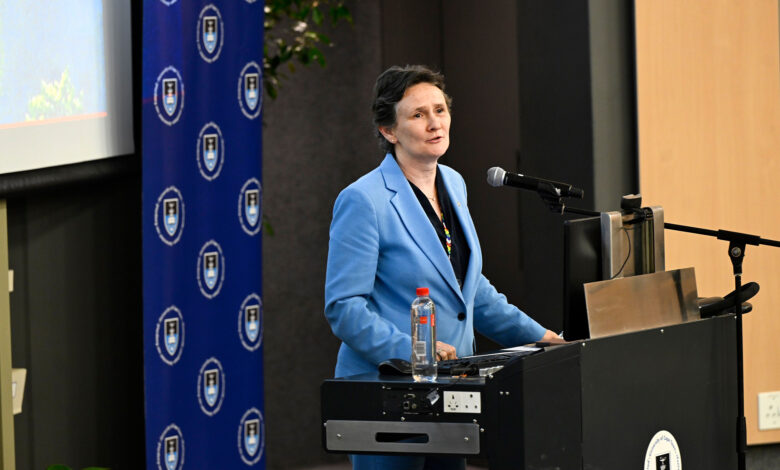
On March 5, 2026, Professor Irene Tracey, Vice-Chancellor of the University of Oxford, presented a Vice-Chancellor’s Open Lecture at the University of Cape Town (UCT), where she underscored the need for universities to implement bold, entrepreneurial, and socially inclusive strategies. This approach is viewed as vital for addressing global challenges and stimulating economic growth.
Insights from Oxford’s Development
In her lecture, Professor Tracey shared insights from Oxford’s development as a leading research institution, outlining how universities can utilize research through innovation ecosystems, foster an entrepreneurial mindset, and build strategic partnerships with industry and government. She stated that universities serve as essential environments for curiosity-driven research and noted, “Once discovery happens, innovation becomes the vehicle that takes that knowledge into the world.”
International Network for Research Universities
The event was part of a larger assembly of leaders from the International Alliance of Research Universities (IARU), a network of elite research institutions that includes UCT as a member for over a decade. The gathering sought to facilitate discussions about the future direction of universities.
Framing and Collective Vision
In her presentation, titled “Framing and Collective Vision – Timing is Essential,” Tracey emphasized the necessity of creating settings conducive to transitioning ideas from laboratories to practical applications in society. She provided examples of significant innovation growth at Oxford, such as the emergence of numerous spin-out companies that often stem from student projects or research efforts highlighted in entrepreneurship competitions.
Entrepreneurship Hub Initiative
One notable initiative mentioned was Christ Church College’s project to transform a property into an entrepreneurship hub, which facilitates connections between students, investors, mentors, and alumni. This initiative reflects a cultural shift within universities towards embracing innovation as a core component of their missions.
The Impact of the COVID-19 Vaccine
Professor Tracey cited the development of the Oxford–AstraZeneca COVID-19 vaccine as a significant illustration of how research can benefit society. The vaccine, which was developed and disseminated globally, played a major role in enhancing public health, particularly in developing nations.
Collaboration for Innovation Ecosystems
During her lecture, she also discussed the essential collaboration among researchers, investors, entrepreneurs, and policymakers necessary to create a fruitful innovation ecosystem. According to Tracey, even modest amounts of early-stage funding can unlock substantial innovation potential, thereby turning ideas into viable business enterprises.
Addressing Inequality in Entrepreneurship
In addressing issues of inequality within the entrepreneurial landscape, especially concerning the underrepresentation of women as founders, Tracey highlighted Oxford’s launch of the Increasing Diversity in Enterprising Activities (IDEA) program. This initiative aims to support women in entrepreneurial endeavors and has reportedly increased the proportion of women founders in university spin-outs to around 37%, a notable advancement from previous statistics.
Panel Discussion on Innovation Ecosystems
The lecture concluded with a panel discussion moderated by Professor Edgar Pieterse, focusing on how various universities worldwide are fostering innovation ecosystems. Panelists stressed that the journey toward creating inclusive growth through innovation requires time and collective participation.
Integrating Communities for Innovation
Professor Mosa Moshabela, UCT’s Vice-Chancellor, recognized that integrating local communities into the innovation process is critical. He asserted that innovation-led growth must benefit all segments of society to secure public support.
Vision for the Future of Higher Education
The lecture presented a vision for the future of higher education, highlighting innovation, collaboration, and inclusivity as fundamental components for universities aiming to make significant impacts in a complex global environment.
Source: University of Cape Town News.