
KAIST Pioneers National Positioning Infrastructure Using Wi-Fi Technology for Enhanced “Location Sovereignty”

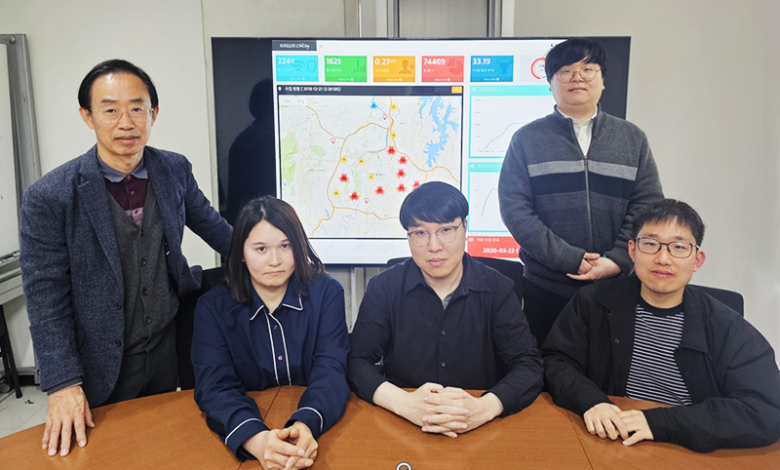
A research team at KAIST has developed a breakthrough Wi-Fi-based positioning technology that enables precise indoor and urban location tracking using only smartphones. Led by Professor Dongsoo Han of the School of Computing, the technology combines Wi-Fi signals from everyday smartphone usage with real-world address data to build a nationwide high-precision positioning infrastructure quickly and cost-effectively. The team’s eight years of research have resulted in multiple patents enhancing the system’s accuracy and scalability.
This technology overcomes limitations of GPS in indoor, underground, or dense urban environments, providing reliable location data without the need for extensive hardware deployment. By constructing unique “signal fingerprint” maps, it allows precise real-time positioning, with accuracy improving as more data is collected.
Beyond everyday convenience, the technology has significant implications for national data sovereignty. Currently, location services are dominated by global tech companies, but KAIST’s solution enables Korea to independently manage its location data. Applications include emergency response, such as faster missing-person searches, location-based authentication for secure financial transactions, and critical infrastructure support for AI-driven industries, including autonomous driving, robotics, and logistics.
Professor Han emphasized that positioning infrastructure is a strategic national asset, urging collaboration between government, telecoms, and platform providers to establish an independent national system. The project was supported by the Ministry of Science and ICT, the National Research Foundation of Korea, the National Fire Agency, and the Korea Evaluation Institute of Industrial Technology (KEIT).