Insights on Urban Innovation and Effective Governance
Reimagining African Cities: Urban Innovation, Collaboration, and Sustainability

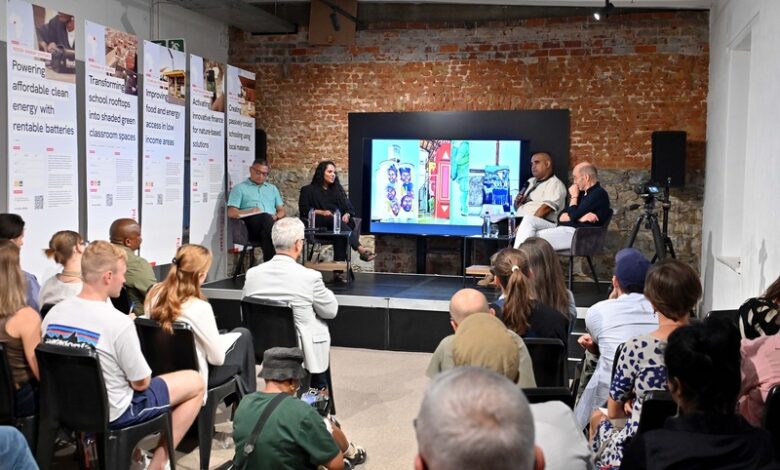
The University of Cape Town’s (UCT) African Centre for Cities, Stellenbosch University’s Centre for Sustainability Transitions, and Utrecht University’s Urban Futures Studio celebrated four years of the African Urban Futures project on 24 March 2026. The event highlighted innovative approaches to making African cities more just, inclusive, and sustainable.
A key output of the project, infrahub.africa, documents and shares inspiring infrastructure initiatives across Africa. Since its launch in May 2023, researchers from the three universities have collected over 70 case studies showcasing projects that promote social justice, support local livelihoods, and reduce environmental harm. These initiatives range from waterless sanitation solutions and sustainable building practices to rentable solar-charged batteries and outdoor mental health services. The platform serves as a reference for alternative urban solutions in rapidly urbanizing contexts.
“Service delivery in African cities is often highly improvised and adaptive,” said Professor Edgar Pieterse, Director of the African Centre for Cities. “We wanted to document these practices to inspire alternative possibilities rather than rely solely on modernist urban solutions. This led to the creation of infrahub.africa.”
Case Study: Philippi Village
Bushra Razack, former CEO of Philippi Village, highlighted the transformation of an old cement factory in Cape Flats into a thriving mixed-use development. The project focuses on entrepreneurship, community engagement, and innovation. Razack emphasized that collaboration with local communities was essential, saying, “Proximity to challenges shaped our approach. By engaging with residents, we became trusted allies, enabling collective solutions and sustainable urban renewal.”
Government-Community Collaboration
City of Cape Town Deputy Mayor Alderman Eddie Andrews discussed the importance of collaboration between government, community, and private sector actors. He cited the Potsdam Sustainability Campus, designed as a living laboratory for sustainable development. The campus supports circular economy practices, climate awareness, and community empowerment along the Diep River, providing an experimental space for innovative solutions in urban governance.
The Three Es for Urban Transformation
Professor Maarten Hajer of Utrecht University emphasized the importance of exhibitions, experiments, and exchanges in promoting sustainable urban futures. Exhibitions inspire and demonstrate practical solutions, experiments allow creative approaches to overcome bureaucratic barriers, and exchanges foster transdisciplinary collaboration with communities, industry, and government actors.
Through projects like Philippi Village and the Potsdam Sustainability Campus, and the extensive documentation on infrahub.africa, the African Urban Futures project demonstrates that inclusive and sustainable urban development is possible when innovation, collaboration, and experimentation converge. The initiative receives support from the Dutch Ministry of Infrastructure and Water Management and the South African Research Chairs Initiative (SARChI).