Advancing Inclusive Education through Knowledge Transfer: APU’s Mission to Empower Street Children

On December 3, 2025, the School of Mathematics, Actuarial and Quantitative Studies (SoMAQS) at the Asia Pacific University of Technology & Innovation (APU) initiated a Knowledge Transfer Programme (KTP) in collaboration with Sekolah Bimbingan Jalinan Kasih (SBJK) in Kuala Lumpur. This program aims to adopt a mission-driven approach to education, focusing on social inclusion and equity for marginalized communities.
Introduction to SBJK
SBJK is recognized as the only institution in Malaysia that specifically addresses the educational needs of street children. It operates under a unique Ministry of Education framework designed for students facing significant challenges, including poverty, family disruption, lack of documentation, and interruptions in their schooling. This initiative aligns with the Sustainable Development Goals (SDG) 4, which advocates for quality education, and SDG 10, focused on reducing inequalities, reflecting APU’s commitment to Environmental, Social, and Governance (ESG) principles.
Overview of the Knowledge Transfer Programme
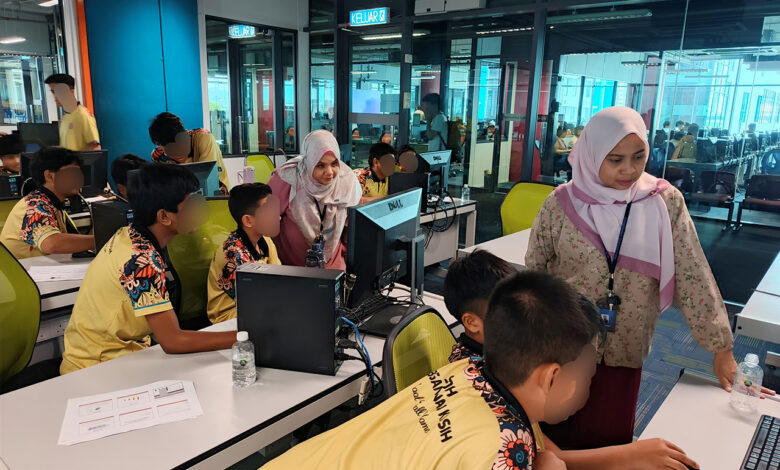
The KTP consisted of three interactive workshops facilitated by APU faculty, including Ms. Sarah Haji Musa, Ms. Hazlina Darman, and Dr. Rahimah Abdul Rafar. These workshops emphasized engaging learners through activities that highlighted practical mathematical skills applicable to daily life, moving away from conventional rote learning techniques.
Activities and Learning Outcomes
During the first day of the KTP, students engaged in group-based mathematical games designed to enhance teamwork and collaborative problem-solving abilities, illustrating the social aspects of learning while promoting cooperation and mutual respect. The second day’s activities included a “Best Buy” game, which taught students to compare prices and make informed financial decisions, thereby linking mathematical concepts to financial literacy and responsible consumption.
Digital Skills Development
On the final day, students were introduced to Microsoft Excel, focusing on basic problem-solving and data visualization skills. This component aimed to improve their digital competencies, aligning with SDG 9, which emphasizes industry, innovation, and infrastructure.
Significance of the Programme
Dr. Rahimah Abdul Rafar, the lead of the programme, noted the significance of fostering confidence and engagement among participants. She highlighted that the exposure to diverse educational experiences enables students to view learning as a pathway to personal development.
Conclusion
Overall, the KTP exemplifies a method by which academic institutions can utilize their expertise to address community needs while contributing to measurable social impact. By enhancing educational access, building confidence, and promoting practical skills, APU maintains its commitment to purposeful education and illustrates the notion that sustainable progress towards the SDGs begins with individuals.
(Source: APU)