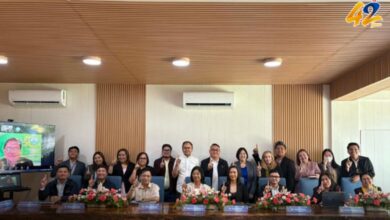

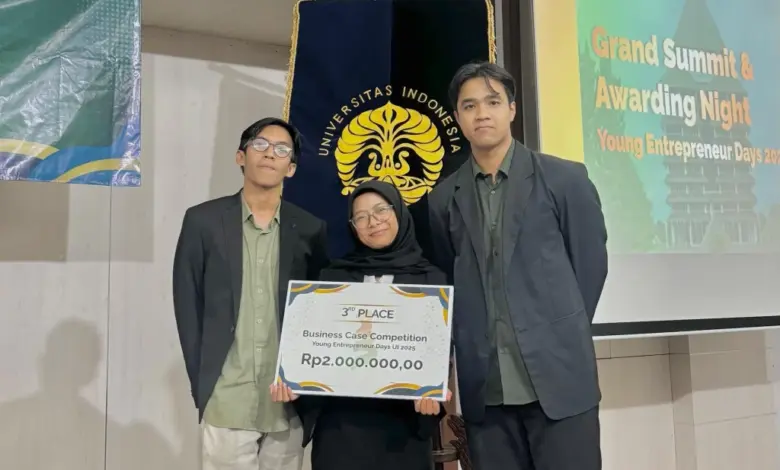
Students from Universitas Airlangga (UNAIR) recently achieved third place in the Business Case Competition at the NBCC Young Entrepreneur Day (YED) UI 2025. The team, which included a Management student from the Faculty of Economics and Business, Renaldi Setiawan, collaborated with two students from the Sepuluh Nopember Institute of Technology (ITS) to showcase their competitive advantage on a national level.
Competition Overview
The competition attracted over 150 teams from universities across Indonesia, underscoring its competitive nature. Results of the competition were announced on December 20, 2025.
Project Focus
The team’s project focused on a case study involving PT Bina Pertiwi, a subsidiary of Astra International and the authorized distributor of Komatsu Forklifts. The company is contending with challenges posed by lower-priced Chinese products and a market shift towards electric and low-emission equipment.
Proposed Strategy
In response to these challenges, the team proposed the “3S with Forklift Strategy,” which encompasses energy source segmentation, flexible financing options, and a long-term energy transition plan. The proposed strategy aims to address current market pressures while supporting sustainability goals and Net Zero Emission targets.
Energy Source Analysis
Setiawan highlighted that the strategy focuses on different energy sources for forklifts, including lead-acid batteries, lithium-ion batteries, and hydrogen fuel cells. The analysis involved evaluating several factors, such as cost efficiency, infrastructure availability, safety, and compliance with environmental regulations in Indonesia.
Analytical Methods
The team employed a variety of analytical methods, including problem mapping through the SCQ framework, SWOT analysis, Porter’s Five Forces, the McKinsey 7S framework, and greenhouse gas emission simulations. Their proposal included a detailed implementation roadmap and potential projections for business impact.
Team Responsibilities
Responsibilities within the cross-campus team were distributed according to each member’s area of expertise. Setiawan spearheaded market analysis and business strategy, while his teammates from ITS concentrated on technology, energy systems, safety assessments, and emission evaluations.
Key Learnings
Setiawan noted that a key learning outcome from the competition was the importance of developing business solutions that are data-driven, context-specific, and ready for implementation. He emphasized that sustainability and energy transition have become crucial elements in future business strategies.
Future Plans
Looking ahead, the team plans to enhance its skills in strategic business planning and energy transition, with the aim of providing practical solutions for Indonesia’s industrial sector through ongoing cross-campus collaboration.
(Source: Universitas Airlangga)