Tianjin University Enhances Collaboration with Électricité de France and Nuclear Power Institute of China

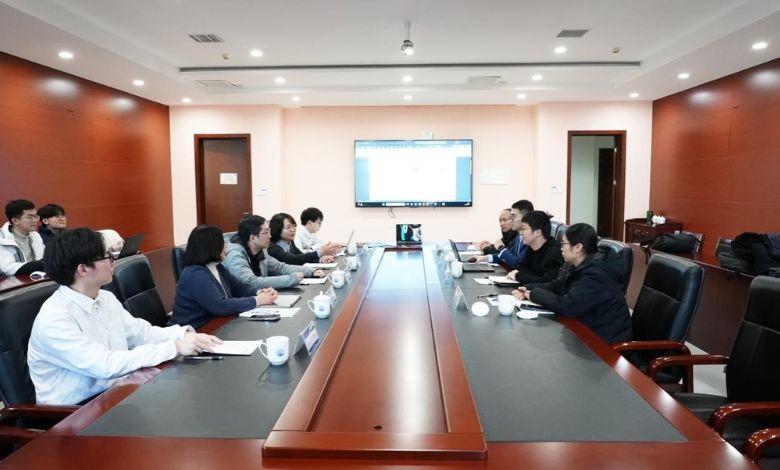
On January 21, 2026, a tripartite cooperation signing ceremony took place in Tianjin involving Tianjin University, Électricité de France (EDF), and the Nuclear Power Institute of China. This event marked the official commencement of the second phase of the “Joint Doctoral Training and Scientific Research Cooperation” project.
About the Nuclear Power Institute of China
The Nuclear Power Institute of China operates under the China National Nuclear Corporation (CNNC) and serves as the largest comprehensive scientific research center in China focused on nuclear reactor engineering. It is often recognized as the “Cradle of China’s Nuclear Power Engineering.”
First Phase of the Collaboration
The collaboration began with the first phase of the project, initiated in 2021, addressing international energy challenges concerning the “Corrosion, Wear, and Life Management of Key Materials in High-Temperature and High-Pressure Environments of Nuclear Power Plants.” This initiative implemented a specialized training model, where selected students participate in research that addresses critical issues in the global nuclear power sector. Students engage with both international material aging research teams and leading domestic engineering groups, applying their findings in real-world industry contexts. The program offers only 2-3 funded positions worldwide each year, resulting in a highly competitive selection process. In the initial phase, one doctoral student and one master’s student from Tianjin University were selected and have completed their respective programs.
Research Platform and Achievements
The first phase utilized a research platform focusing on “Research on the Coupling Mechanism of Fretting Wear and Corrosion of Heat Exchanger Tubes in Operating Environments.” It established a collaborative innovation mechanism that integrates international industrial research and development networks with a joint industry-university-research community. This partnership successfully combined fundamental research, technological advancements, and engineering applications, culminating in the publication of several high-level scientific papers in prominent academic journals. Additionally, the team developed a high-temperature, high-pressure in-situ electrochemical testing system, alongside predictive databases and models for fretting-corrosion damage, which contribute to the safe operation and maintenance of nuclear power facilities.
Second Phase of the Collaboration
The initiation of the second phase represents a substantial progression in the collaboration among the three organizations, enhancing efforts to foster talent through international cooperation within the industry-university-research-application framework. The renewed agreement expands the research focus into new areas, including multi-scale analysis of energy material behaviors, life extension technologies, and intelligent monitoring practices. Future plans encompass establishing flexible talent exchange mechanisms, including short-term visits and workshops for early-career researchers.
Engagement and Goals of Tianjin University
Tianjin University intends to use this partnership to further engage with leading international enterprises and research institutions, encouraging interdisciplinary integration across chemical engineering, materials science, and nuclear engineering. The university’s goal is to cultivate high-level, interdisciplinary professionals who possess a global outlook and innovative capabilities. By aligning educational initiatives with global scientific and technological advancements, Tianjin University aims to equip students to address emerging challenges and contribute to a sustainable future.
This article was contributed by the School of Chemical Engineering and Technology and edited by Sun Xiaofang.