Deputy Prime Minister’s Message Opens Historic Higher Education Summit as Asia’s First Dual-Track University Rankings Go Live
493 universities across 41 Asian nations ranked for the first time under a system that separates public and private institutions — with student satisfaction at its core

By Xtra! Xtra! News Desk
KUALA LUMPUR — 2 December 2025
In what organisers are calling a watershed moment for Asian higher education, the AppliedHE Xchange 2025 summit concluded last week at Sunway University with the unprecedented launch of the ALL ASIA Public & Private University Rankings 2026 — the continent’s first university evaluation system to separately benchmark public and private institutions while placing student experience at the heart of its methodology.
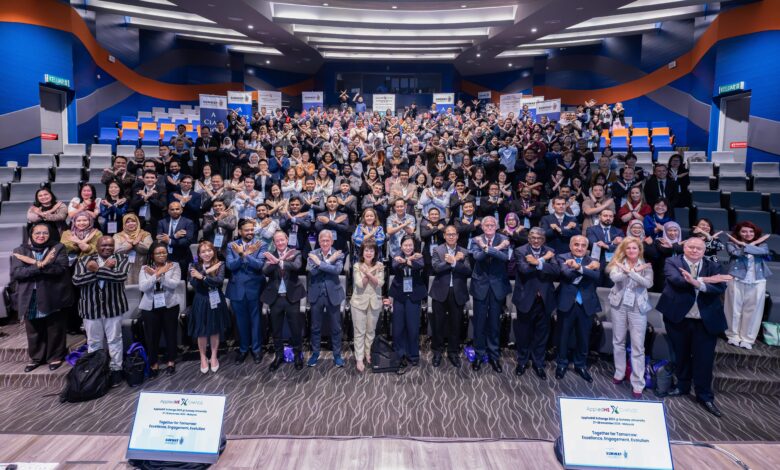
The three-day gathering, held from 27–29 November under the banner “Together for Tomorrow: Excellence, Engagement, Evolution,” brought together 254 delegates from 21 countries and 69 institutions, culminating in a gala dinner where the region’s top universities were recognised. The summit opened with a powerful message from Malaysia’s Deputy Prime Minister, delivered on his behalf, that challenged the region’s educational orthodoxies.
Deputy Prime Minister’s Message: “TVET is No Longer Plan B”
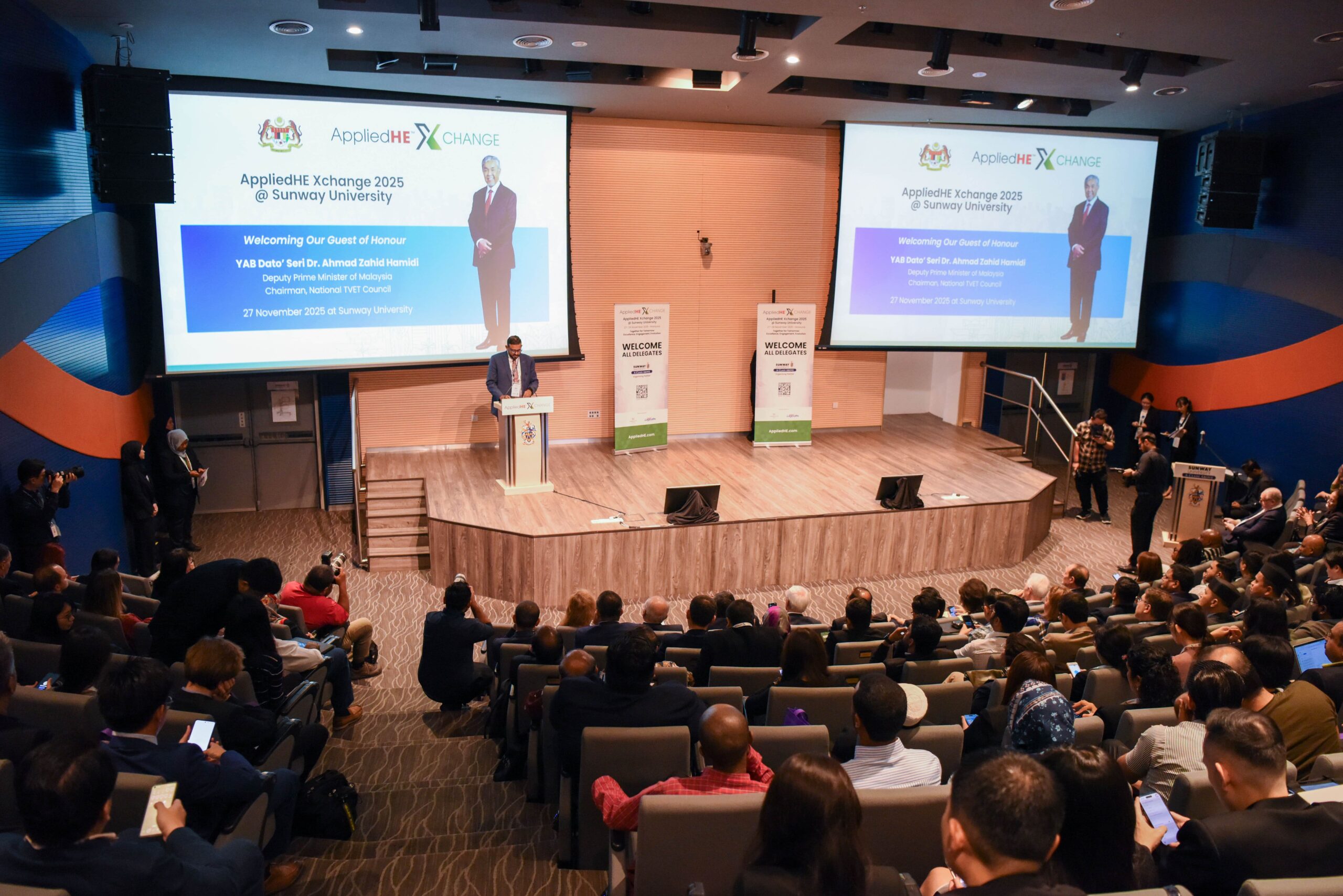 Datuk Seri Dr Ahmad Zahid Hamidi, who holds the dual portfolio of Deputy Prime Minister and Chairman of the National TVET Council, sent a keynote message to the summit that was delivered on his behalf during the opening ceremony — signaling a fundamental shift in Malaysia’s educational philosophy.
“TVET is no longer ‘Plan B’ — that is the message I want to emphasize,” Dr Ahmad Zahid wrote in his address to the assembled university presidents, vice-chancellors, and education policymakers. “In the past, we used to hear people say, ‘If you cannot make it to university, then you go to TVET.’ That mindset must end.”
The Deputy Prime Minister backed his assertions with striking data: more than 53 to 54 percent of Malaysia’s secondary school leavers now select technical and vocational education as their first choice, with participation projected to reach 70 percent by the end of the 13th Malaysia Plan. Graduate employability rates at many TVET institutions, he noted, run between 95 and 100 percent.
“Skills are becoming the new currency,” Dr Ahmad Zahid declared in his message, calling on universities and TVET providers to forge partnerships rather than compete for students.
The address carried particular weight given Dr Ahmad Zahid’s endorsement of AppliedHE’s approach to rankings — specifically its decision to evaluate public and private universities on separate tracks.
“By recognising these differences, AppliedHE allows students, parents and other stakeholders to compare ‘apples with apples,’ giving each type of institution a more meaningful space to tell its story,” he stated.
Rankings Unveiled: Hong Kong Leads Public Sector, South Korea Dominates Private
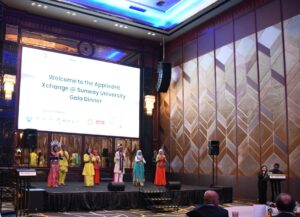
The evening of 27 November saw delegates gather at Sunway Resort for what became the summit’s defining moment: the unveiling of the ALL ASIA Rankings across both institutional categories.
Public Universities: Traditional Powerhouses Hold Ground
The University of Hong Kong claimed the top position among public institutions, narrowly edging out the National University of Singapore and Peking University. Hong Kong institutions dominated the upper echelons, securing five of the top twenty positions.
ALL ASIA Public University Rankings 2026 — Top 10:
| Rank | Institution | Country/Region |
|---|---|---|
| 1 | The University of Hong Kong | Hong Kong |
| 2 | National University of Singapore | Singapore |
| 3 | Peking University | China |
| 4 | Nanyang Technological University | Singapore |
| 5 | King Fahd University of Petroleum and Minerals | Saudi Arabia |
| 6 | The Chinese University of Hong Kong | Hong Kong |
| 7 | Tsinghua University | China |
| 8 | City University of Hong Kong | Hong Kong |
| 9 | Qatar University | Qatar |
| 10 | Fudan University | China |
Malaysia secured three positions in the public top twenty: Universiti Kebangsaan Malaysia at 16th, Universiti Malaya at 18th, and Universiti Sains Malaysia at 20th.
Private Universities: Korean Institutions Set the Pace
South Korea’s private university sector proved dominant, with Yonsei University taking the top position, followed by Sungkyunkwan University and Korea University. Korean institutions claimed six of the top twenty slots.
The host institution made a notable showing: Sunway University ranked 6th among all private universities in Asia, positioning Malaysia’s private sector as a serious regional contender. UCSI University (9th), Universiti Teknologi PETRONAS (11th), and Taylor’s University (12th) further demonstrated Malaysian strength in the private category.
ALL ASIA Private University Rankings 2026 — Top 10:
| Rank | Institution | Country/Region |
|---|---|---|
| 1 | Yonsei University | South Korea |
| 2 | Sungkyunkwan University | South Korea |
| 3 | Korea University | South Korea |
| 4 | Hanyang University | South Korea |
| 5 | Waseda University | Japan |
| 6 | Sunway University | Malaysia |
| 7 | POSTECH | South Korea |
| 8 | American University of Sharjah | UAE |
| 9 | UCSI University | Malaysia |
| 10 | Kyung Hee University | South Korea |
Geographic Reach: A Continent-Wide Assessment
The rankings’ scope proved ambitious: 493 universities evaluated across 41 countries spanning all six regions of Asia. Indonesia led with 73 ranked institutions, followed by the Philippines (60), Malaysia (44), India (29), and South Korea (28).
“AppliedHE was started because we saw an important gap — university rankings often don’t reflect what really matters to students and the communities they live in,” said Mandy Mok, Founder and CEO of AppliedHE, during the launch ceremony. “With ALL ASIA, we’re creating an Asia-rooted, globally trusted ranking that listens to students, focuses on employability and real-life outcomes — not just reputation.”
Methodology: Student Voice Takes Centre Stage
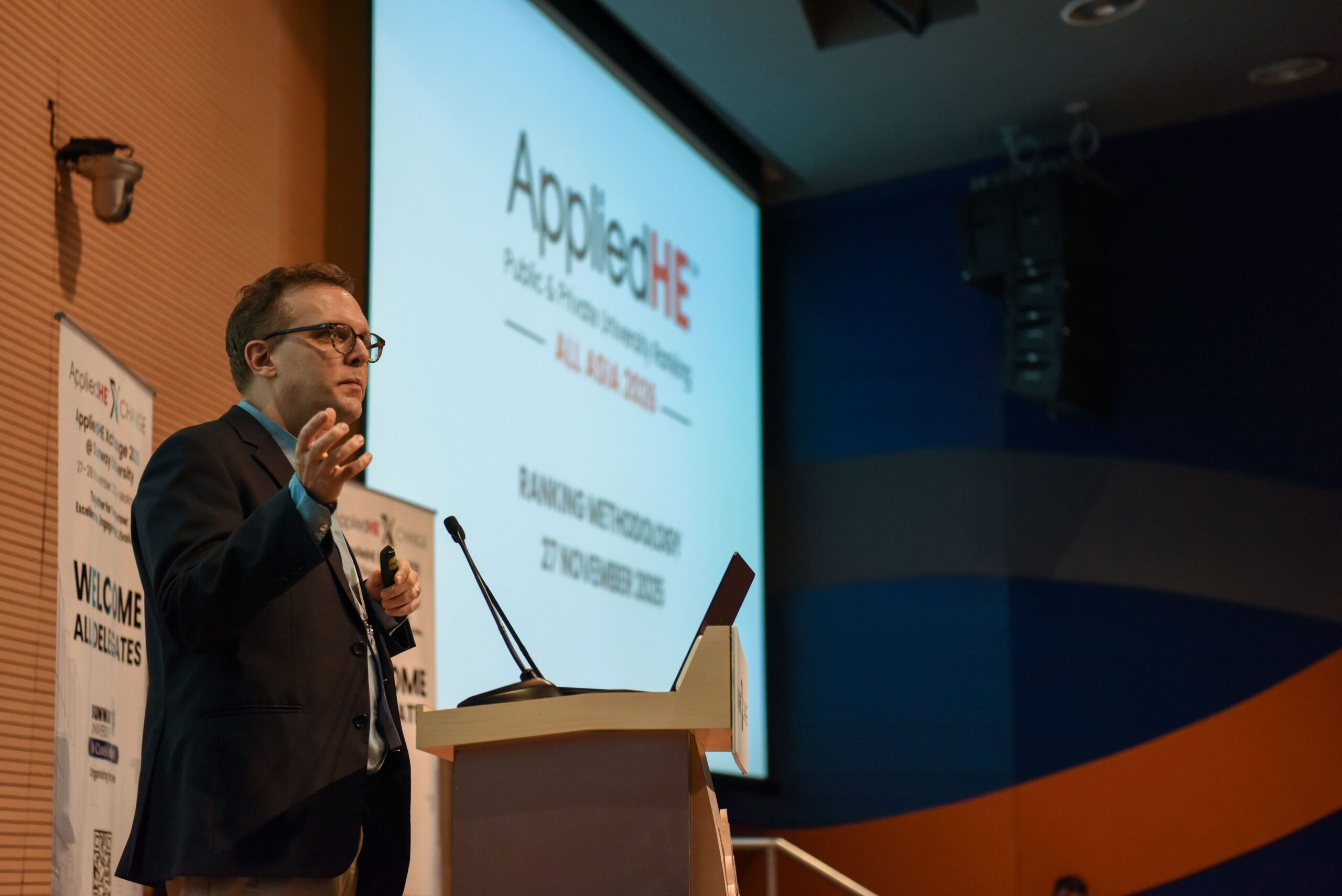 What distinguishes the ALL ASIA rankings from established competitors is its explicit incorporation of student and alumni feedback into the evaluation framework.
The methodology rests on six core indicators: Community Engagement, Employability, Student Satisfaction, Research, Internationalization, and Peer Recognition. Crucially, student-based metrics are drawn from structured surveys covering teaching and learning experience, support services and campus life, career guidance, and online learning quality.
“Rankings should not only be about prestige,” Mok emphasized. “They should also reflect how students actually experience their education — in the classroom, online, and in their transition to the world of work.”
Professor Kevin Downing, Chair of the AppliedHE Ranking Committee and Secretary to Council at City University of Hong Kong, articulated the rationale for dual-track evaluation: “Asia’s higher education landscape is powered by both sectors. Public universities often carry national mandates, while private universities are agile pioneers in education innovation, employability, internationalisation, and industry partnerships. ALL ASIA is designed to honour both — side by side, on their own terms.”
“Rankings Are Poisonous!” — Summit Debates the System It Created
In a characteristically self-aware move, the summit featured a formal debate on the motion: “Rankings are Poisonous!”
The AppliedHE “Squaring the Circle” debate format pitted academics from City University of Hong Kong, Lingnan University, Cebu Technological University, Adamson University, and Walter Sisulu University against one another in a structured examination of whether rankings drive genuine improvement or merely distort institutional behaviour.
Professor Downing, who earlier delivered the opening keynote titled “The Curse of Rankings,” had set the stage by exploring how metrics-obsession can redirect resources from student outcomes toward ranking-friendly activities.
The debate underscored a tension that runs through modern higher education: the need for benchmarking and accountability versus the risk of reducing complex institutions to numerical scores.
From Workshops to Declaration: Institutions Forge Regional Compact
The summit’s collaborative workshops produced more than discussion — they generated a formal commitment.
Day Two’s workshop on “Internationalisation and Student Diversity,” facilitated by Professor Abhimanyu Veerakumarasivam (Provost, Sunway University) and Marcel Bandur (Studyportals), culminated in the adoption of the AppliedHE Declaration on Mission-Driven Higher Education Excellence & Regional Resilience.
The ten-point declaration, developed through World Café dialogues and gallery walk activities, commits signatory institutions to principles including:
- Mission Clarity: Defining institutional purpose with local relevance and societal impact
- Social License: Earning public trust through transparent governance
- Ethical Internationalisation: Global engagement that strengthens rather than extracts from local communities
- Pro-Social AI Transformation: Integrating technology while upholding human values
- Knowledge Security: Protecting research assets and intellectual property
- Future Skills: Producing graduates with critical thinking, empathy, resilience, and adaptability
“We stand united in our belief that it is time to collectively redefine success,” the declaration’s preamble states, “shifting our focus decisively from the pursuit of external prestige to the steadfast delivery of meaningful local purpose.”
New Initiatives: Academic Road Trip and the 3M Framework
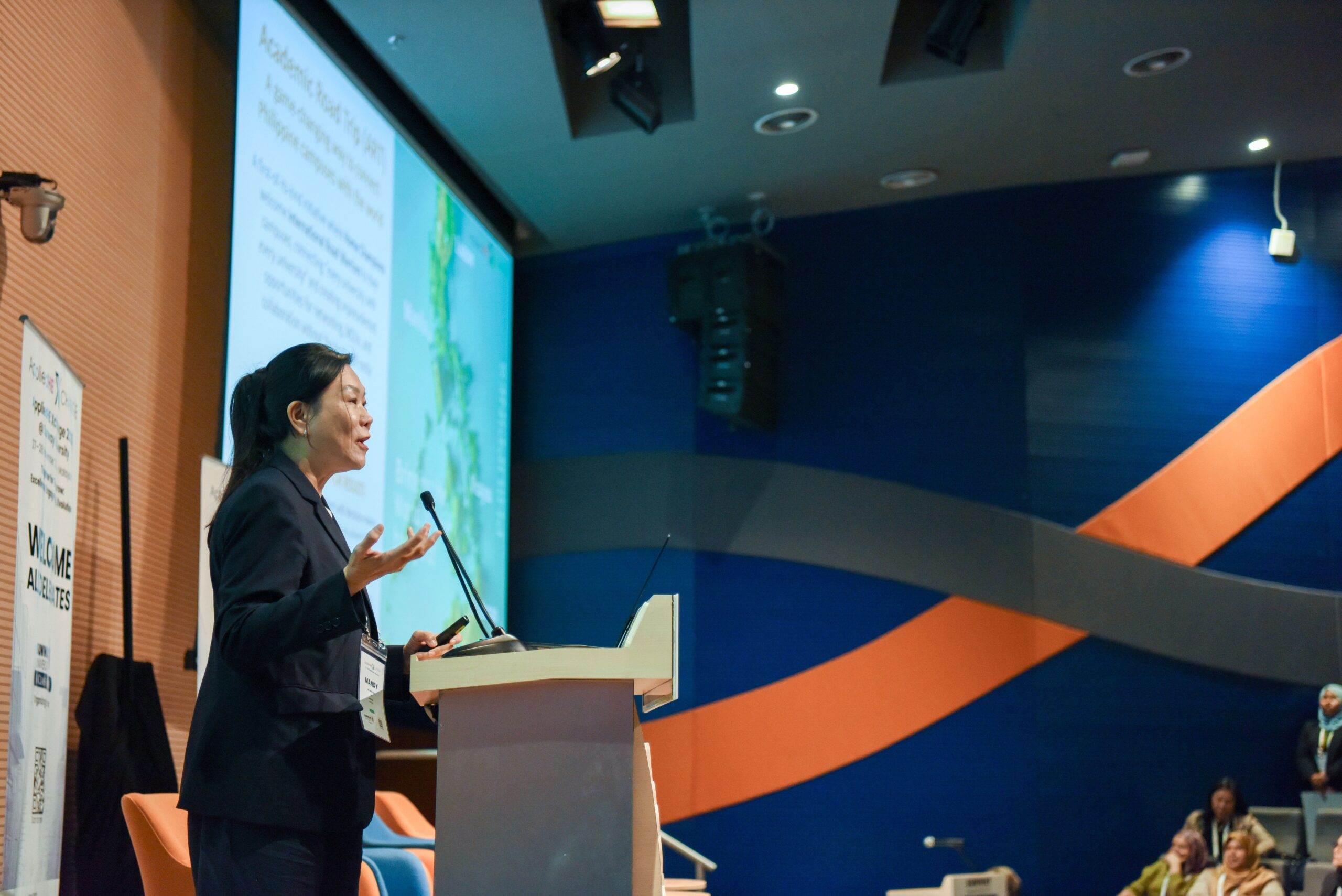 Beyond rankings, AppliedHE used the summit to launch two strategic initiatives.
Academic Road Trip (ART)
The Academic Road Trip program introduces a model for international collaboration that bypasses traditional conference circuits. Under ART, “Home Champions” — initially Philippine universities — host “International Road Warriors” for direct engagement, MOU development, and partnership building without requiring costly overseas travel.
“No booths. No waiting. Direct engagement with decision-makers,” the program materials promise, positioning ART as a more efficient pathway to internationalization for resource-constrained institutions.
The 3M Framework
AppliedHE also introduced new strategies around its comprehensive 3M Framework — JOB-Ready, ALUMNI-Ready, and SOFT SKILLS-Ready – which addresses critical dimensions of institutional excellence.
The Deputy Prime Minister explicitly endorsed the framework’s alignment with Malaysia’s TVET priorities in his message: “Much of the work being done by AppliedHE already reflects the priorities we are pursuing in TVET and higher education, particularly its focus on employability.”
A Truly Pan-Asian Gathering
The summit drew delegates from across the continent, representing a diverse range of institutions and countries.
Malaysia contributed the largest delegation as host country, with strong representation from the Philippines, Indonesia, India, Vietnam, Azerbaijan, and Brunei. The summit’s reach extended well beyond Southeast Asia, drawing participants from South Africa, Latvia, the United Kingdom, Germany, and the Maldives.
Institutional delegations reflected the diversity of the region’s higher education landscape, with notable groups from Asia Pacific University of Technology and Innovation, Ramon Magsaysay Memorial Colleges, City University Malaysia, Quest International University, and Azerbaijan State University of Economics, among others.
The summit attracted senior leadership from across the sector, including Vice Chancellors, Presidents, Rectors, Deans, and Directors, alongside academics, researchers, and administrative professionals. Industry partners including Studyportals, Education Malaysia Global Services (EMGS), and Cintana Education also participated, underscoring the growing nexus between academia and industry.
The App.LE Club — AppliedHE’s members-only consortium — maintained significant presence, with member institutions securing exclusive access to Day Three’s intensive workshop: “Rankings: The Secret Sauce.”
Workshops Drive Actionable Insights
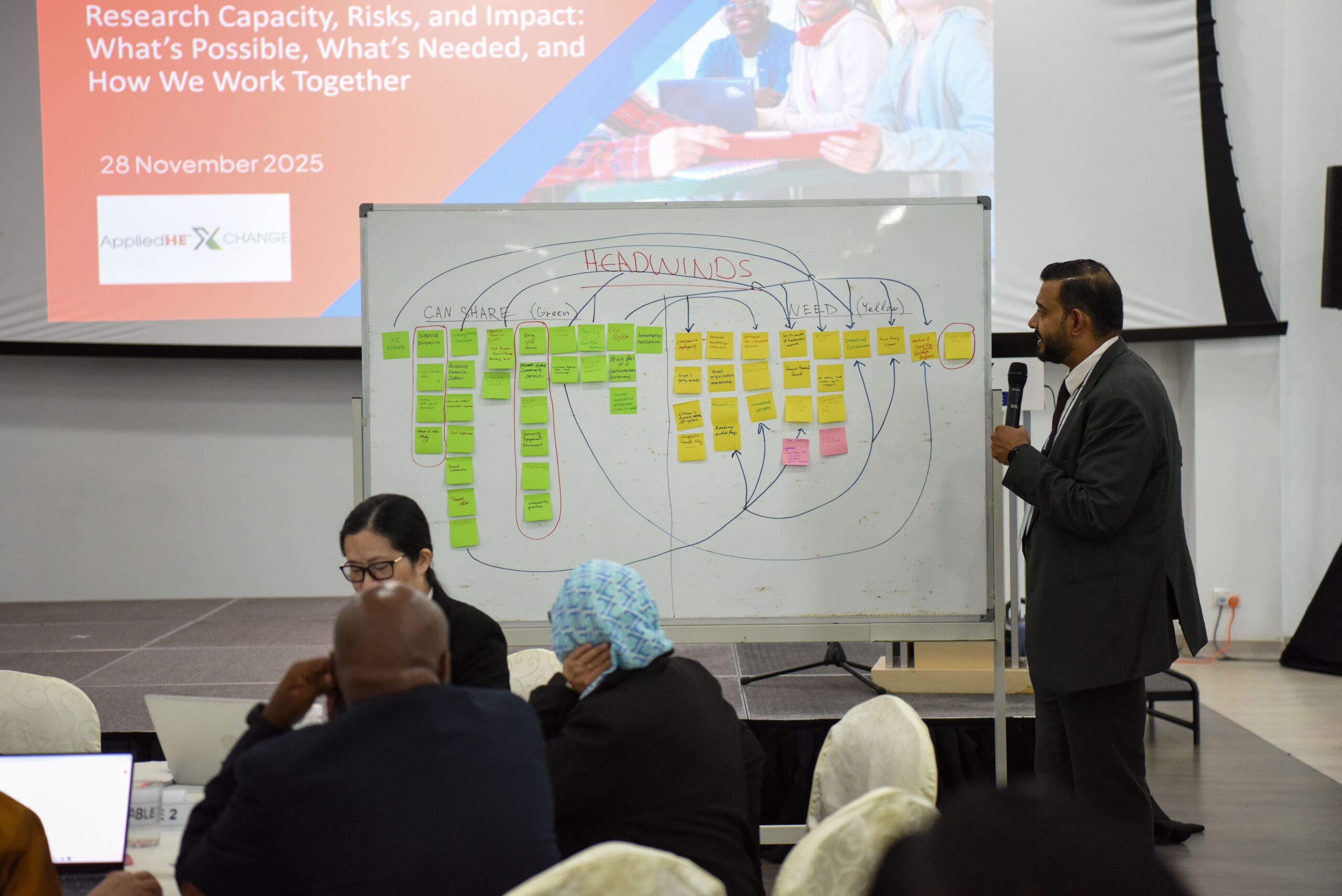 Beyond the headlines, AppliedHE Xchange 2025 delivered substantial professional development through a series of interactive workshops:
- Internationalisation and Student Diversity Workshop — Exploring strategies for building diverse, globally-connected campuses
- Research Capacity, Risks, and Impact Workshop — Addressing the challenges and opportunities in institutional research development
- Rankings: The Secret Sauce — An exclusive App.LE Club Members workshop providing insider insights on ranking strategies
A Special Thank You to Sunway University
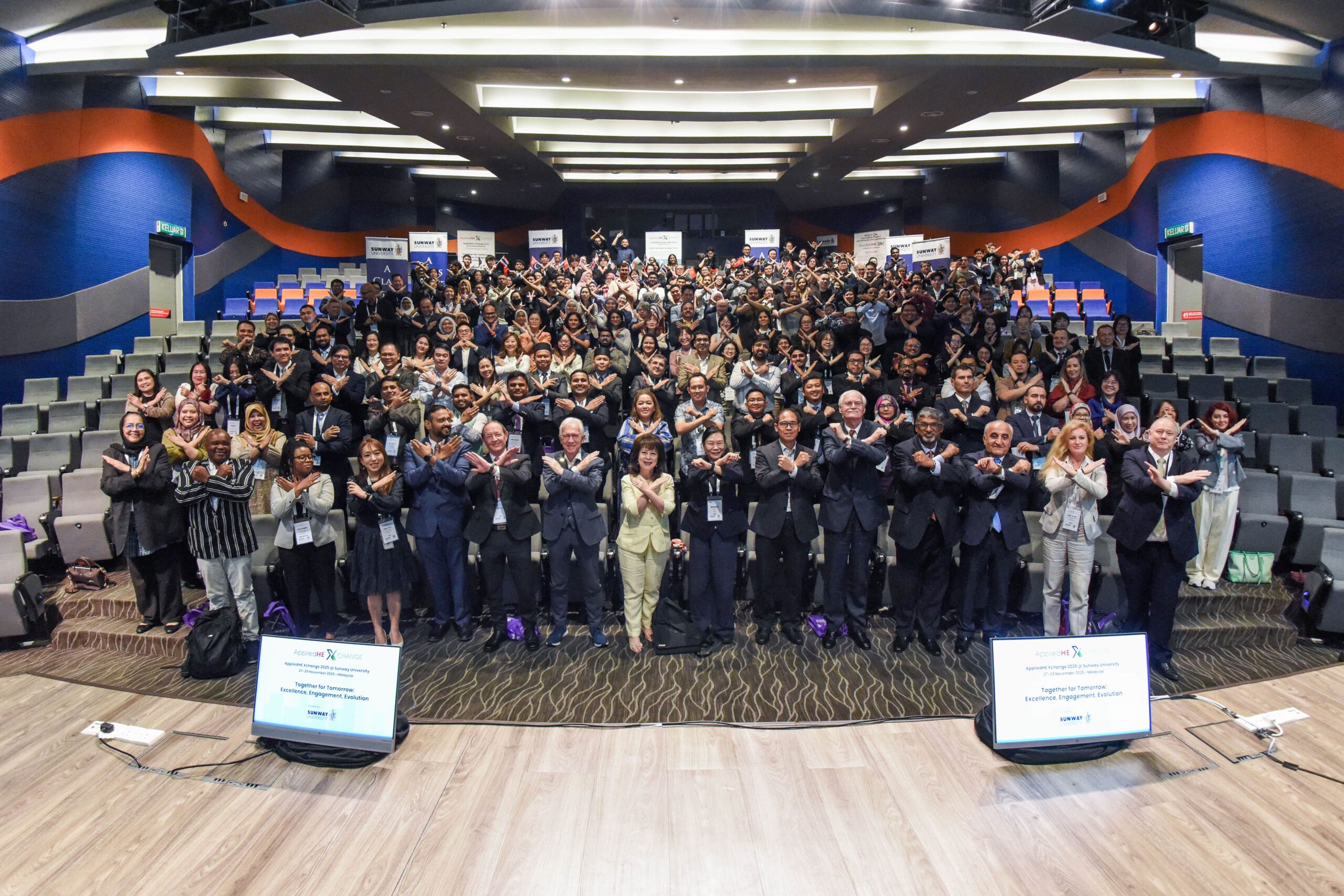 AppliedHE extends its heartfelt gratitude to Sunway University for being an exceptional host and partner for Xchange 2025. The university’s world-class facilities at the Sunway City campus provided the perfect setting for thought-provoking discussions, while Sunway Resort served as an unforgettable venue for the Gala Dinner and rankings launch.
Special recognition goes to the Sunway University Secretariat team and the dedicated student volunteers who worked tirelessly behind the scenes to ensure every session ran smoothly and every delegate felt welcomed.
“Sunway University has been more than a host – they have been true partners in our mission to transform higher education across Asia,” said Ms Mandy Mok, Founder & CEO of AppliedHE. “We are deeply grateful for their partnership and look forward to continuing this remarkable collaboration.”
It is fitting that Sunway University – ranked 6th among all private universities in Asia – demonstrated the very qualities that the ALL ASIA Rankings seek to celebrate: excellence, engagement, and a student-centered approach that puts people first.
Closing Arguments: Rankings for “Shared Prosperity”
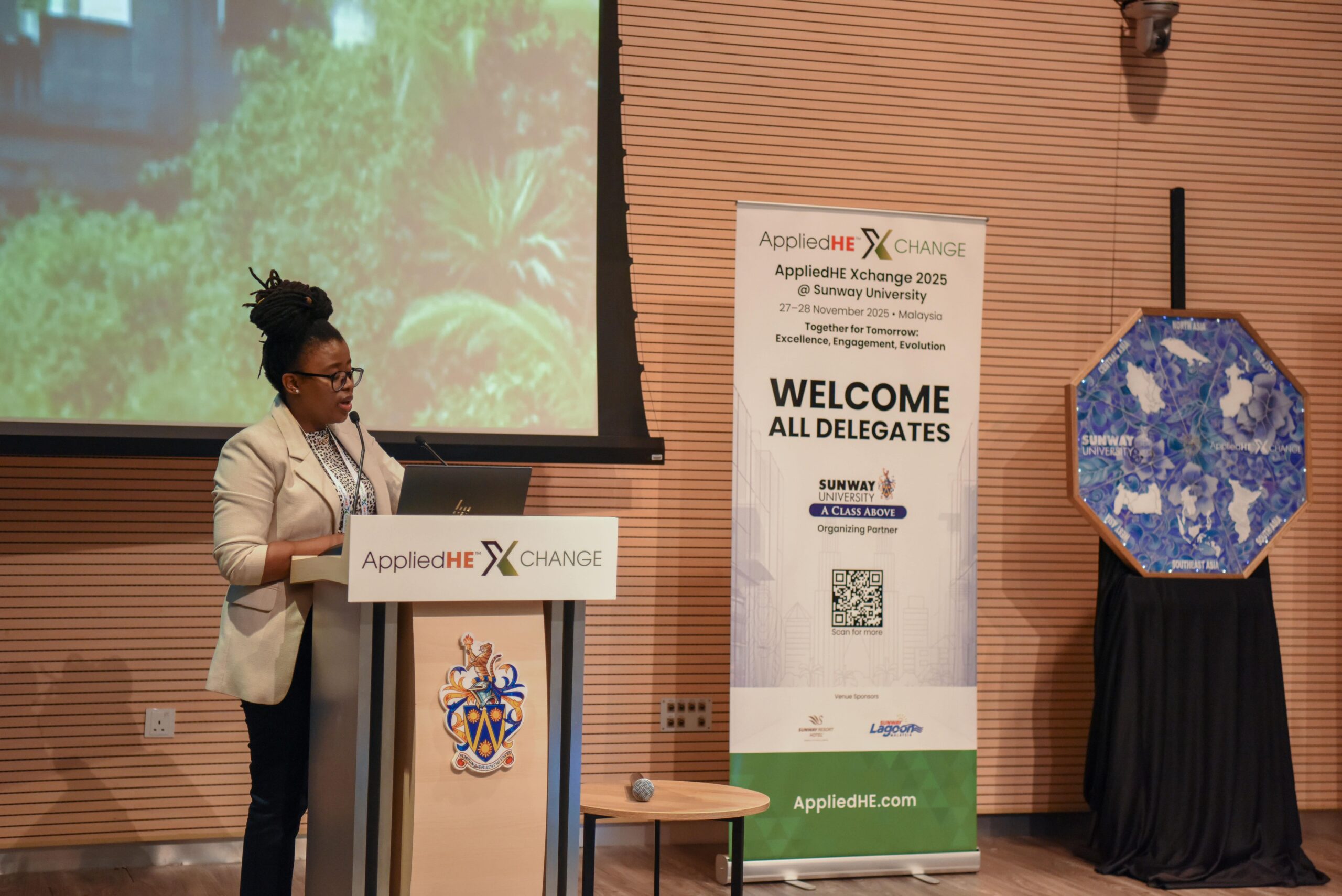 Dr Phyllis Kedibone Chembe, Special Adviser to the Vice-Chancellor at Walter Sisulu University, delivered the closing keynote with an argument for ranking systems that advance equity rather than entrench advantage.
Her address, titled “The Role of Inclusive Rankings in Attaining Shared Prosperity in Global Higher Education Futures,” called for evaluation frameworks that recognize diverse institutional missions and regional contexts rather than privileging established research powerhouses.
The message echoed the Deputy Prime Minister’s earlier challenge in his keynote address: “If we succeed, then one day, when parents and students look at a university prospectus or a TVET brochure, they will not ask, ‘Is this second class or first class?’ They will ask, ‘Will this institution help me become skilled, employable, ethical and future-ready?'”
What Comes Next
AppliedHE has positioned the ALL ASIA rankings as an annual exercise, with institutions now able to participate in data collection for future editions. The Academic Road Trip program is slated for rollout in the Philippines, with potential expansion to other markets.
For the 493 universities now ranked – and the hundreds more across Asia watching from the sidelines – the question is whether a student-centered, dual-track ranking system can genuinely shift incentives away from prestige-chasing toward outcomes that matter.
The answer will emerge not from summit speeches but from institutional decisions made in the months ahead: in curriculum committees, in budget allocations, in the daily work of teaching and supporting students.
As Professor Downing observed in his opening keynote, rankings can be either a curse or a tool. Which they become depends on how institutions – and the systems that evaluate them – choose to define success.
Event Details
Event: AppliedHE Xchange 2025 @ Sunway University
Theme: Together for Tomorrow: Excellence, Engagement, Evolution
Dates: 27–29 November 2025
Location: Sunway University & Sunway Resort, Kuala Lumpur, Malaysia
Organiser: AppliedHE, Singapore
Host Institution: Sunway University, Malaysia
For media enquiries: [email protected] | www.appliedhe.com
About AppliedHE
AppliedHE is a Singapore-based higher education evaluation, branding, and consulting organization founded in 2020 by Mandy Mok. The organization works with universities, quality assurance agencies, and industry partners across Asia to develop rankings, ratings, and performance improvement tools focused on employability, student experience, and societal impact.
© 2025 Xtra Xtra / AppliedHE. All rights reserved.