Rapid Testing Methods to Combat Chemical Resistance in Australian Cattle Ticks

Researchers at the University of Queensland (UQ) are seeking collaboration with Australian cattle producers to study the rising resistance to chemical treatments used for controlling cattle ticks. Chemical treatments are vital for managing these pests, which can negatively affect cattle weight gain, milk production, and contribute to disease transmission.
Collaboration for Tick Sample Collection
Dr. Hannah Siddle, a research fellow at UQ, highlighted the importance of gathering tick samples from across Queensland to conduct a thorough assessment of chemical resistance. Producers, regardless of whether they currently face issues with tick resistance, are encouraged to contribute samples to enhance the understanding of this phenomenon in Australia.
Identifying Resistance in Tick Populations
Identifying tick populations that are resistant or susceptible to various chemical treatments is essential, according to Dr. Siddle. The increasing resistance to commonly used chemical groups poses a significant challenge for cattle producers.
Genomic Sequencing for Resistance Testing
The research initiative will also focus on sequencing the genomes of ticks to support the development of rapid and reliable resistance tests. This methodology aims to identify genomic markers that could streamline the testing process, thereby improving the efficiency of resistance detection.
Utilization of the RaTexT Testing Kit
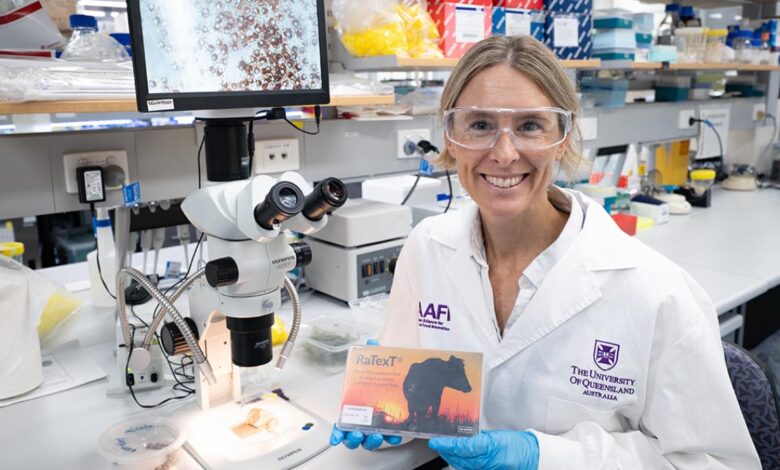
The analysis will utilize a novel testing kit called RaTexT, which was developed in the Netherlands and tested in Brazil. This kit provides results within 24 hours, marking a substantial improvement over traditional diagnostic methods that often require up to six weeks for results. Dr. Siddle noted that the RaTexT kit serves as a research tool and is not intended to replace existing biosecurity protocols.
Informed Decisions for Cattle Producers
Dr. Guilherme Klafke, a collaborator from Brazil’s State Centre for Diagnosis and Research in Animal Health, remarked that the prompt results from the RaTexT kits could aid producers in making informed management decisions regarding tick infestations. He further indicated that genomic analysis might provide insights into the movement of tick populations and their development of resistance in response to cattle mobility.
Funding and Participation
Funding for this research is supported by Dr. Siddle’s Australian Research Council Mid-Career Industry Fellowship, in partnership with animal health companies Boehringer Ingelheim and TBD International.
Invitation to Cattle Producers
Cattle producers interested in participating in the trial may complete a survey to receive guidance on how to collect and submit tick samples for testing. Further information can be obtained by contacting Dr. Siddle directly via email.
This research highlights the critical intersection of agricultural practices and scientific advancement in addressing the challenges presented by cattle ticks in Australia.
Source: University of Queensland News